LNG is a super-polluter that the UK imports to prop up dwindling North Sea gas
Hidden menace of LNG

What is LNG?
LNG is Liquefied Natural Gas - natural gas, compressed into a liquid that can be carried by ship. Imports into the UK are rising rapidly to fill the gap in supply as North Sea Gas runs out. The problem is that it has a much higher carbon footprint than North Sea gas due to the way it is produced and transported. Worse, official monitoring fails to acknowledge the emissions and effects that scientists are seeing, so governments turn a blind eye to protect their emissions targets.
Methane emissions from LNG are 2-3 times higher than officially reported
Authorities rely on oil and gas producers to self-report their emissions, including CO2 and methane (CH4). However, independent researchers consistently find leaked methane levels 2-3 times higher than the self-reported numbers used by governments, whether measuring it on the ground, from the air or from space. And there's another problem...
Methane potency 3 times higher than benchmark figures suggest
Methane is a powerful greenhouse gas, that traps 120x as much heat as CO2. However, the GWP of methane gets smaller over decades as methane breaks down. Early climate experts adopted the GWP100 standard to study methane's effects over 100 years, which ignores the short term impact. Now that methane is a huge problem, many scientists argue that GWP100 hides methane's dangerous spike in short-term heating potential, and call for a switch to the GWP20 to reflect actual observations. (GWP100 = 28x, GWP20 = 84x)
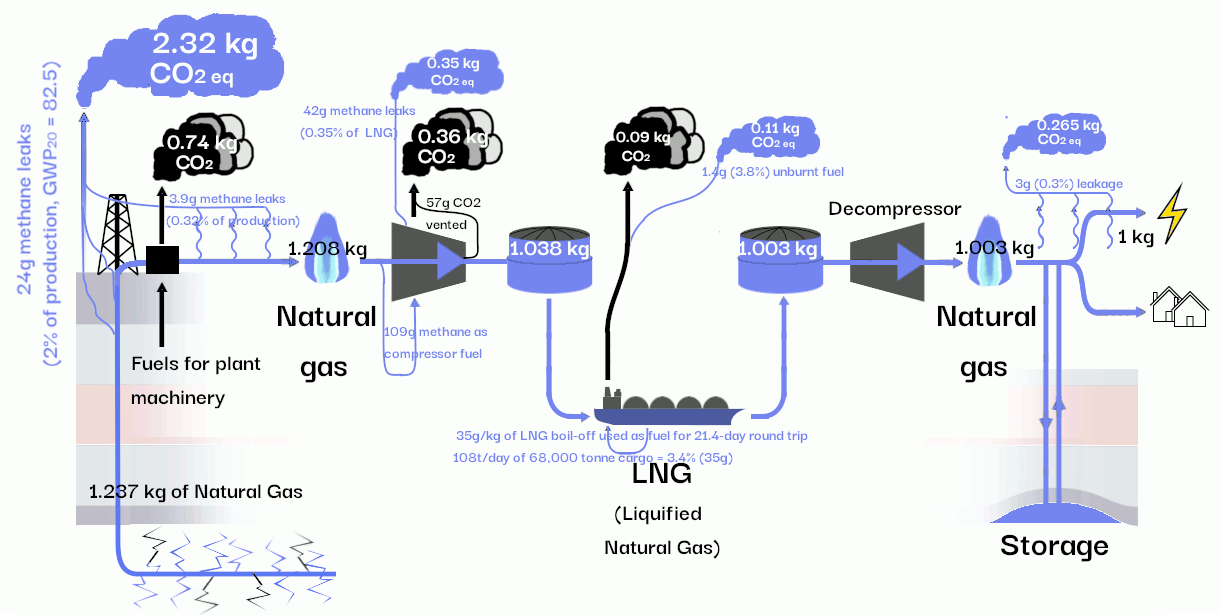
LNG produces 7kg of emissions in the short term, not just 2.75kg
Burning 1kg methane produces 2.75kg of CO2, but the real footprint is much higher - over 7kg for LNG if considering the effects of methane over 20 year period instead of 100 years:Table 1: Total emissions from well to consumer, per kg of gas consumed, include 'upstream' emissions, from extraction and transport. Short-term harm of methane leakage (GWP20 = 84) is much worse than the 100-year standard (GWP100 = 28) suggests:
|
CO2 from burning |
Upstream CO2 |
Upstream CH4 |
Upstream CH4 GWP100 (CO2eq) |
Total (CO2eq) |
Upstream CH4 GWP20 (CO2eq) |
Total (CO2eq) | |
|---|---|---|---|---|---|---|---|
| Natural gas | 2.75kg | 0.2kg | 0.015 kg | 0.42 kg | 3.37kg | 1.238kg | 4.188kg |
| LNG | 2.75kg | 1.062kg | 0.040 kg | 1.12 kg | 4.932kg | 3.294kg | 7.105kg |