Images by Ahmet Kurt on Pexels


Welcome to my ENERGY website...

UK energy is at a crossroads. North Sea oil and gas are running out. The nation's spend on fossil fuels has risen to over £120 billion each year. In contrast, clean, cheap renewable electricity begins to liberate the UK from the issues of relying on imported fuel. But the dash to cut emissions also brings fake solutions that shift emissions away from oversight, while actually increasing costs and pollution - such as carbon capture, bioenergy, hydrogen. When voters fail to cast a critical eye, we all pay the price. Read on to discover hopes and fears for the energy transition. Become inspired and outraged, with the help of simulations, charts and opinion that every voter should note. Now is the time to decarbonise energy, to end dependence on petro-states and premium-priced fossil fuels forever.

Can renewables replace costly fossil fuels? Yes, of course, but how? Renewables will save the UK many £Billions in the long run, but equally, bad energy decisions could ruin us. I created a unique simulation of the UK electricity grid to help you answer your own questions about what our future energy might look like, and how much it might cost. This powerful model crunches your input with real-life data to find answers to this and much more.

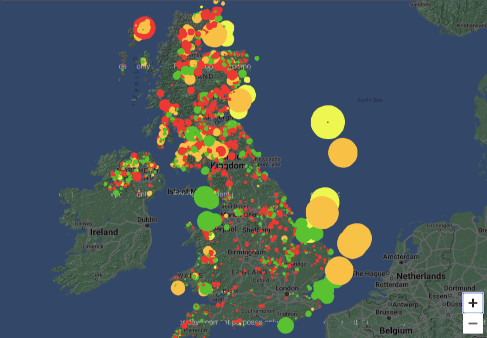
I also write about renewable energy technologies. Some are exciting, with real potential to improve our lives. However, others are scandalous, based on false claims and bad economics, at eye-watering cost to tax payers (Yes, I refer to carbon capture, biofuels, hydrogen transport . . . and more). Also to check out: my interactive maps and charts, for revealing insights into UK energy and world emissions.

Photo by Colin Watts on Unsplash

The Grid Model

Finding the future of UK Energy


During the 27 years since the Kyoto Protocol (the first global treaty aimed at cutting carbon emissions), emissions have DOUBLED as producers try to get it all out of the ground before anyone can stop them.
photo: Wikimedia/ NIOSH.

Assess the cost of Net Zero

See and decide for yourself - pathways to UK net zero, and their costs.

There are some wild numbers floating around, claiming that electification by 2040 will cost anywhere between £1-7 trillion. Which is correct? This grid model allows you to explore what's required and what it costs. For context, the UK currently spends £120 billion each year on oil and gas. Read on to discover more...


What if the UK built more turbines? (Move the blue slider)

times as much wind power installed would generate times as much electricity, right?

Charging - storing electricity
Discharging - using battery
Blackout - System crash
Curtailed - Excess wasted


Your browser will not support this graphic. Try enabling Javascript.


What is happening here?

You are playing with real-world electricity data . The first part scales up wind output to see how it matches demand (the black line). The second part adds batteries (storage), that provide power to fill shortfalls in supply, and use surplus supply to recharge. The shaded areas are the shortfalls and surpluses.

Find out more ... visit our

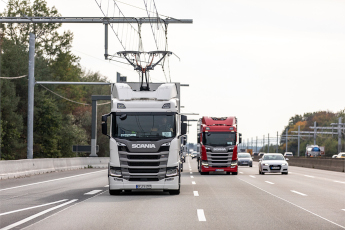
Electrified motorways like this one in Germany could solve the problem of battery size for long-range trucks, cutting emissions and saving £millions in fuel. Plans for similar pilot schemes in the UK have stalled.
Photo: Siemens


Solar shelters provide cool shade from sun and rain... and they're not on farmland. Photo: WikiMedia/ AirborneMedia

Climate change is an energy issue

Get Wise. Bust myths. Talk. Call time on costly carbon.

The 1997 Kyoto summit was the first world treaty aimed at reducing carbon emissions. In the 30 years since, producers have not only stalled, lied and raced to get as much out of the ground before anyone can stop them, but governments and consumers - yes, that’s you and me - have knowingly made excuses or turned a blind eye to the harmful consequences of our own decisions (to continue to consume oil and gas)

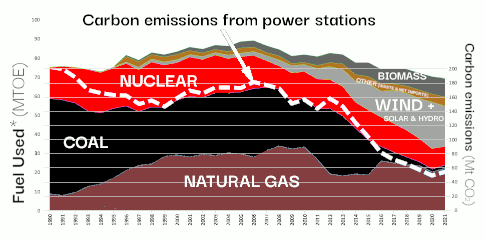
Britain's main emissions culprits today are road transport and heating, accounting for 50% of emissions from fossil fuels. Whilst other sectors have fallen dramatically, these have barely decreased in 35 years. Now electric cars and heat pumps have the potential to eliminate all those emissions. Emissions from electricity production have fallen by 75% since 1990. This is partly thanks to North Sea Gas, but increasingly due to growing wind and solar power, which provided 1/3 of the UK's electricity in 2023.


Your browser will not support this graphic. Try enabling Javascript.
UK power stations emissions since 1990


Help make the future happen now - cheaper, cleaner, quieter, safer . . .

Know your stuff. Bust Myths. Talk.

US chopping down forests to sell as fuel

'Biomass' (wood) pellets that the UK burns for electricity are 'dirtier than coal'. Studies show they produce at least 25% more CO2 than coal, and the trees don't grow back properly until the next century. So why are we burning them?

[full article]

CCS - Lies, delays, and a figleaf for polluters

As the world became aware of global warming, the oil industry re-branded ‘Enhanced Oil recovery’ as ‘Carbon Capture and Storage’, with the promise of guilt free fossil fuels. Now, despite $ billions in public subsidies, that promise never arrived. Instead, it allowed big oil to double all-time carbon emissions.

[full article]

The terrible price of LNG

Once touted as a clean fuel, nobody is pretending any more. But gas-producing states are betting big money on a rapid expansion of markets for Liquified Natural Gas, despite its high cost and carbon footprint up to three times as high as 'fresh' natural gas.

[full article]

Hydrogen - bandwagon of delusion

Hydrogen as fuel is over-hyped, over-priced, and faces intractable problems of cost, distribution and storage. Worse, it has another massive problem: pollution. Until electricity is 100% fossil-free, then producing hydrogen is dirtier than burning coal. It will never be affordable or workable for cars, homes, shipping or aviation, yet it might still be the only solution to long-term electricity storage.

[full article]

'Standing Charges' block decarbonisation

The 'standing charge' on household energy bills openly subsidises energy wastefulness, but it also directly impedes investment to reduce consumption. There is an alternative...

[full article]

Climate tech solutions - real or sham?

25 years ago, alternatives to coal and oil ranged from the idealistic and eccentrically over-optimistic to the greenwash and fraudulent. While many quietly died (remember concentrated solar mirrors or wave power?) some proved their detractors wrong - wind turbines, solar panels, lithium batteries, Tesla EVs, heat pumps - and are beginning to reshape the energy world. What are the futures of today's green technologies?

[full article]

Agriculture - carbon threats & opportunities

The land and the sea play massive roles in carbon cycles that can be sensitive to farming. Simple changes in beef, rice, prawn, and cereal cultivation could have huge impacts on carbon dioxide and methane emissions, as well as sequestration.

[full article]

Biofuels displace 300 times more valuable farmland than equivalent solar panels
110,000 acres of UK wheat grown for bioethanol in 2023. Solar panels could provide for the same driving distance from just 370 acres (about 3 golf courses)
Photo: Wikimedia/ Dreamy Pixel

Electrified motorways like this one in Germany solve the problem of battery size for long-range trucks, cutting emissions and saving £millions in fuel. Plans for similar pilot schemes in the UK have stalled.
Photo: Siemens

Solar shelters provide cool shade from sun and rain... and they're not on farmland. Photo: WikiMedia/ AirborneMedia